

«How about a dollar?»
The gamble that launched Preston Sturges' directing career

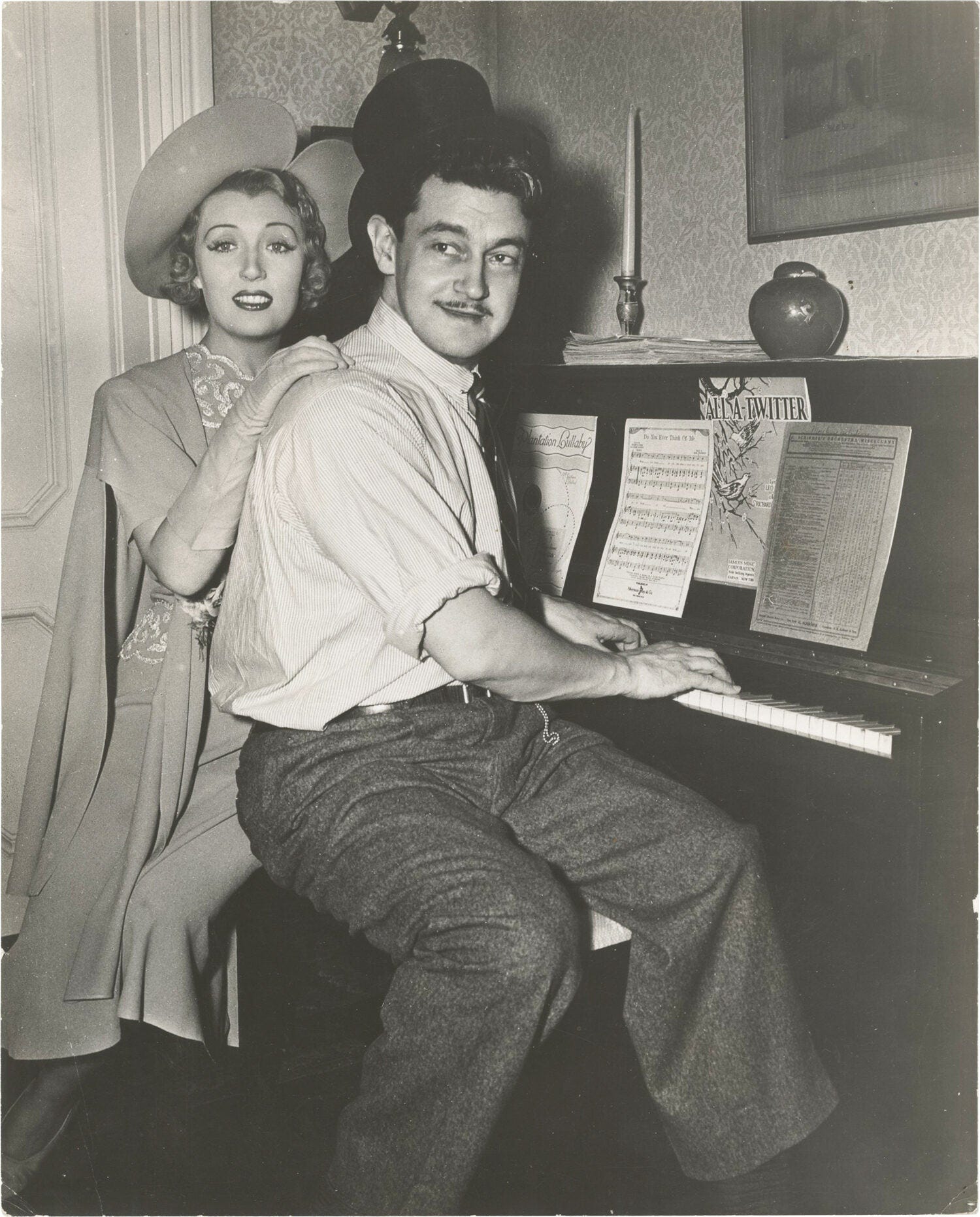
At every opportunity, I badgered Mr. William LeBaron, the production chief, to allow me to direct, suggesting those pictures on the roster for future production that no one could direct as well as I, if I could once be allowed to prove it. Always his response echoed the constant advice I received from well-meaning friends: «Shoemaker, stick to your last». It took years before I found the answer to that one: «Show me the man who has stuck to his last, and I’ll show you a shoemaker».
Then came the night of nights. Mr. LeBaron, also the executive producer of Paramount studios, was coming to my house for dinner. Here was the great opportunity to convince this shrewd and kindly man that I was destined to direct and that were he to embrace my destiny, it would probably do the studio a little good, too. The seduction of a virgin saint would not have been better planned.
My kitchen was in an uproar for two days before the event. My wife, her angelic disposition a little ruffled for once, almost had hysterics, and Edna the cook nearly had a heart attack, but when Mr. LeBaron arrived, we were ready for him. The hors d’oeuvres gleamed like jewels. The soup was a velvet poem; the fish, a dream; and the roast, a masterpiece. I talked casually about directing and my wife watched Mr. LeBaron anxiously. He seemed undecided.
Then came the salad. Mr. LeBaron weakened visibly. With the dessert, he was almost gone. The Napoleon brandy finished him. «What was that biography story again that you always wanted to direct», he gasped.
After a dinner like that, I didn’t tell the story very well, but it must have been well enough. He said, «I don’t see how a man who could produce a dinner like this could possibly fail to make an excellent picture.» I helped him into his car, then sank down on the front steps and gulped the night air.
The first round was over.
The next day at the studio Mr. LeBaron sent for me. He said, «I am perfectly willing to stick by my bargain of last night, and what I remember of the story, I remember as being very good, but are you sure you want to become a director? It’s a terrible job. You have to get up at six o’clock in the morning and stand on your feet all day listening to a lot of ham actors muffing their lines until rigor mortis sets in. You are already a very successful writer with many credits to your name. If you make yourself ridiculous as a director, you will be less valuable as a writer. You are undertaking a very dangerous thing. You remember the adage, ‘Don’t change horses in midstream.’ To that, let me add, ‘Don’t change careers in midlife.’»
I told him that I realized all the dangers, but that I had to do it, even if it ruined me. I had wanted to for so long. I was beginning to like the picture business, I told him, but there was only one job in it and that was making them. Everything else was secondary, and I was not by nature a second-fiddle player. «Be it on your own head», he said. Then as I turned to leave, he added, «By the way, how much do you want for the story? I’ll okay any price you say, but let me point out that the less it costs to bring in your first picture, the more it will be admired.»
«How about a dollar?» I said.
At the door, I paused and said, «As a matter of fact, I’m going to make a hell of a picture for you.»
He looked up from his big desk and smiled. «As a matter of fact, I know it.»
The legal department changed the one-dollar price to ten dollars, which they felt was more legal, and the New York office changed the title The Biography of a Bum to The Great McGinty1 because they said «bum» meant something terrible in Australia.
Preston Sturges by Preston Sturges, (adapted and edited by Sandy Sturges), Simon & Schuster, 1990.
For The Great McGinty, Preston Sturges won the 1940 Academy Award for Best Original Screenplay. The New York Times named it one of the «10 Best Films of 1940».